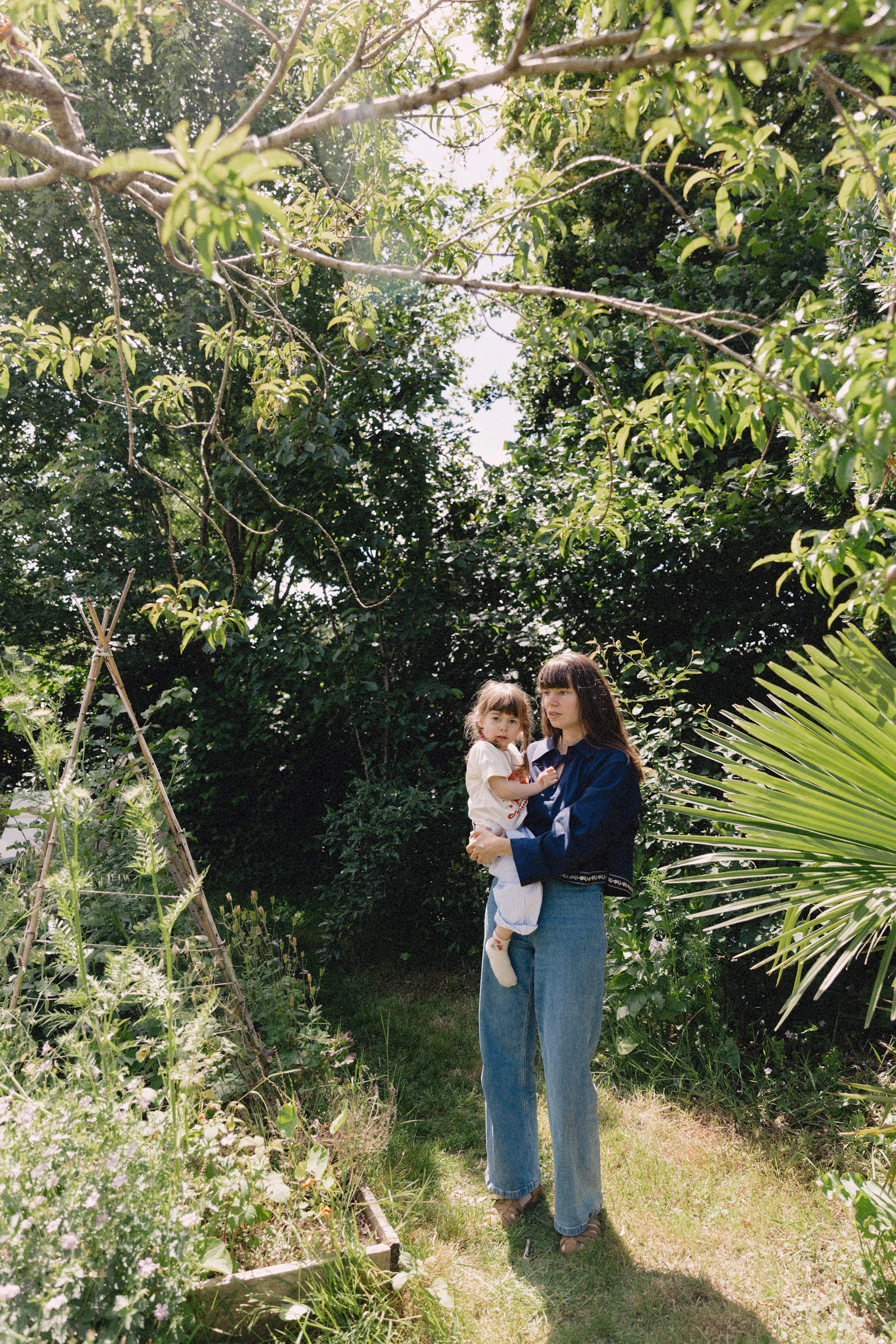
Portrait de bretonne, with Isabelle
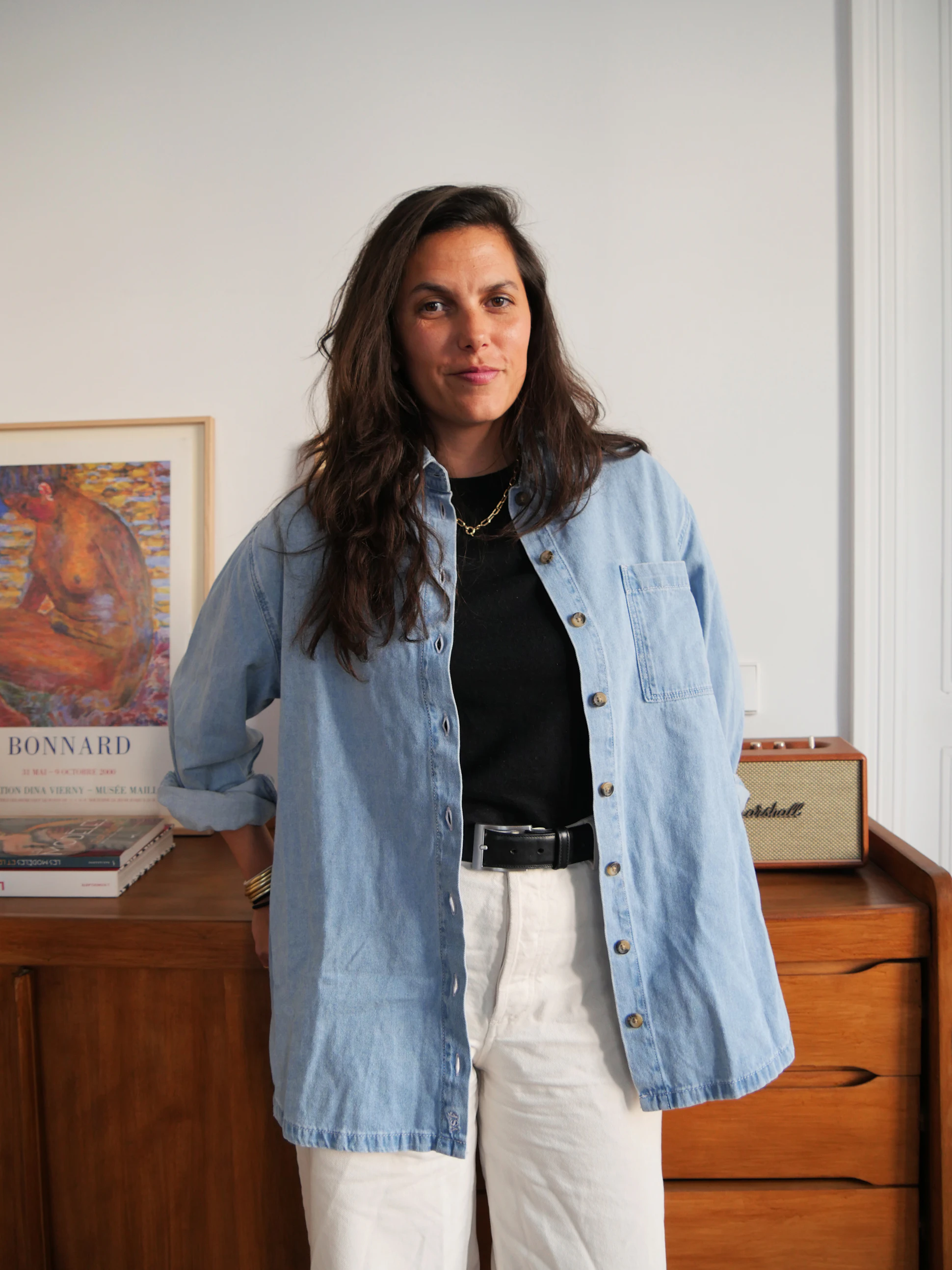
Today, we meet Isabelle, co-founder of Blumenhaus magazine, who moved to Morbihan five years ago.
The female gaze
with Iris Brey
Everything comes down to the gaze. The way we see ourselves, the way we perceive others and their bodies, the way we are taught to desire…
Contrary to representations inherited from a patriarchal culture, the concept of the female gaze helps us better understand the biases we carry within us. It is precisely this concept of the female gaze that author and director Iris Brey explores in her research.
And for you, we asked her a few questions.
Could you introduce yourself and tell us a bit about your background?
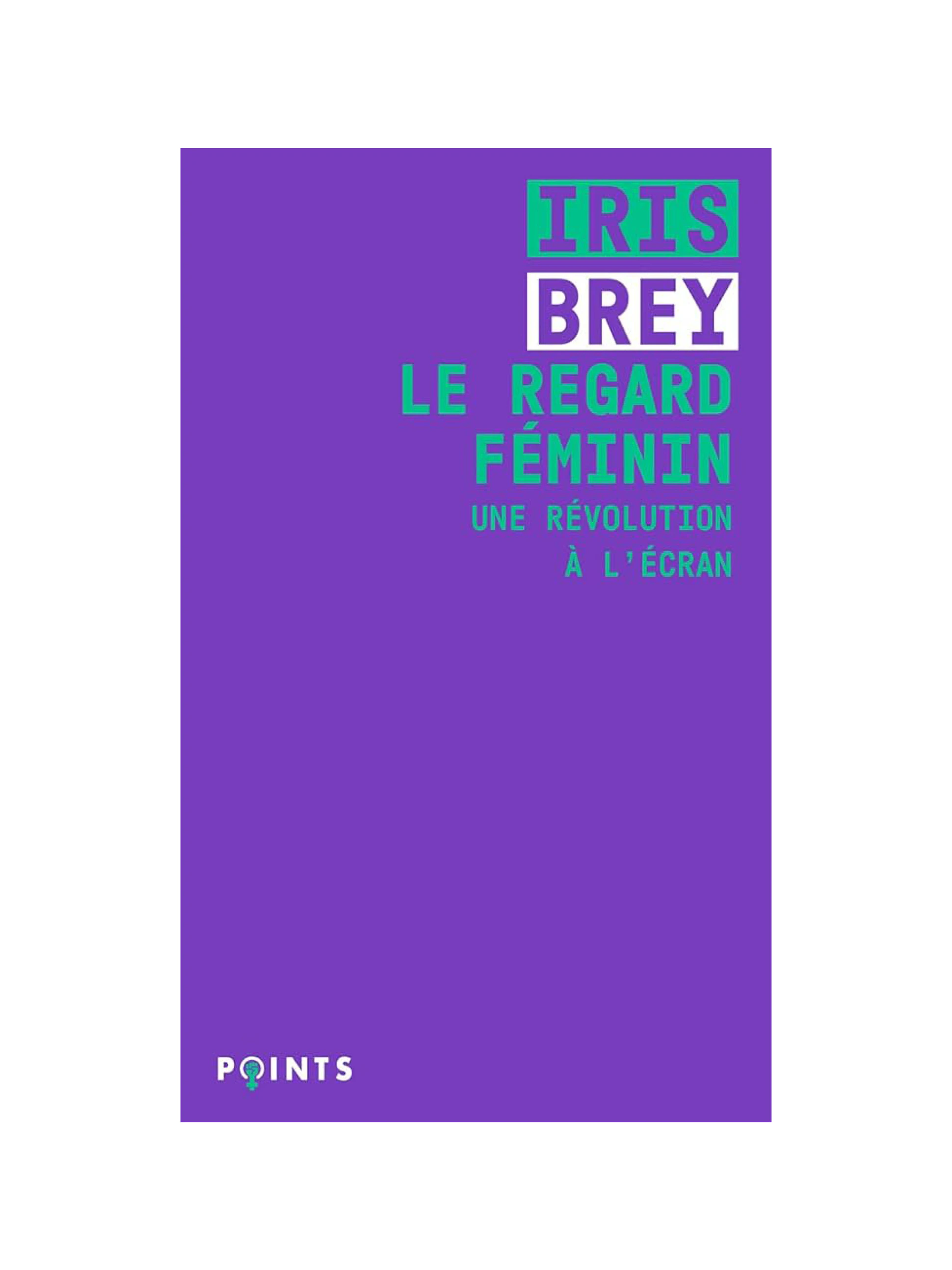
My name is Iris Brey, and I am an author and filmmaker. I started out as a film lecturer at university, then worked as a critic, wrote my first book, Sex and the Series, and my second, Le regard féminin. I’ve written others since then, but the most recent is La véritable histoire du test de Bechdel, and I’ve since moved into directing with my first series, Split, broadcast on France Télévision Slash.
How would you define the concept of the female gaze, and what does it actually mean to you?
I have conceptualised the female gaze, not by defining it as the perspective of a female filmmaker, but by presenting it as the perspective that allows us, as viewers, to feel what a female character is going through in a film, a series or a work of art. It is about being able to say to oneself that one feels what the female character is going through, that one empathises with her experience, rather than identifying with her.
To recognise this female gaze, I think we need to trust our bodies and ask ourselves, when faced with a work, whether we are dealing with a female character filmed as an object or as a subject. Do we feel as though we are watching her from a distance, or accompanying her through her experiences?
In your view, how can women reclaim their own way of looking at bodies and experiencing desire, by breaking free from representations inherited from a patriarchal perspective?
I think we need to understand that we all share a collective imagination, and that this imagination is patriarchal. We have all been brought up on the same images, which sexualise women by treating them as objects. To decolonise this imagination, we need to watch works in which female characters think for themselves, in which they are subjects in their own right, and which make us want to get to know them. Little by little, we need to become aware of what makes us uncomfortable, of the positions we no longer wish to occupy, and to seek out works that reflect us more closely.
We must celebrate these works, share them with our friends, draw connections between them and pass them on so that they stand the test of time. We must recognise that these works are just as important as those that cast men in the role of the hero.
To take this further, we must also recognise that it is not the role of the hero or heroine that matters, but rather finding works that highlight the connections, whatever they may be, between characters who are all viewed as subjects. Thinking in a more intersectional way, taking into account issues of gender, race and class, and seeking out works that engage with us and reflect our experiences.
For those who would like to explore these issues further, would you have any recommendations of works that help to better understand them, or that are particularly marked by the female gaze?
There are a thousand works that I would like to share, and I talk about many of the films that have an important place in my books.
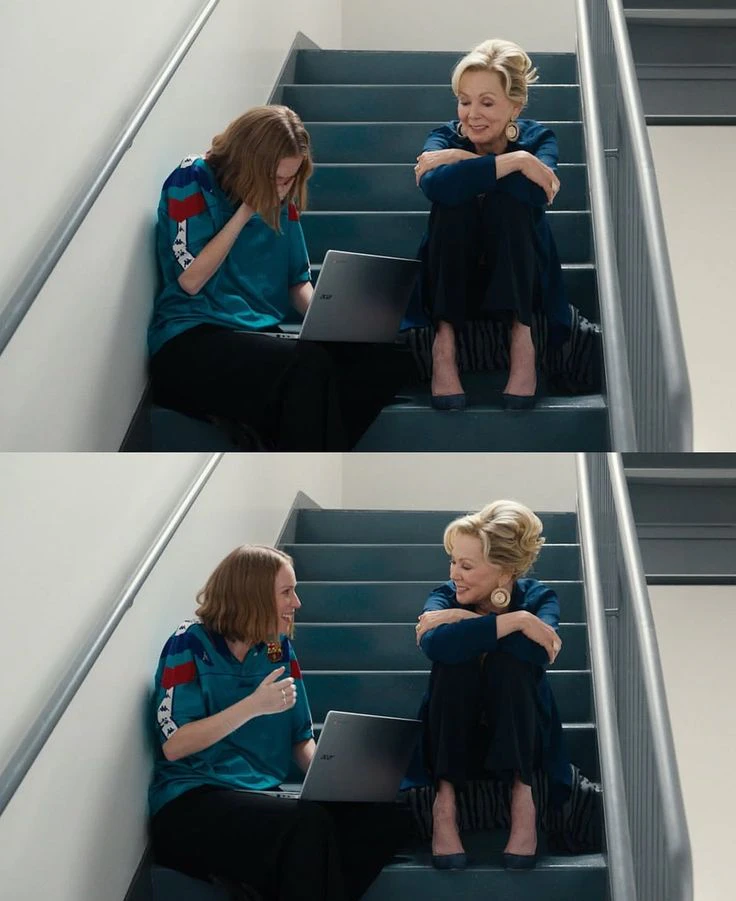
Among the more recent works I haven't been able to mention in my writings is the series Hacks. It's a beautiful story about the relationship between a young woman who wants to be an actress and a much older actress who hires her to write for her. I find this mentor-student relationship quite rare, and it's also a very funny series.
I'd also like to mention Rosalia's album Lux: I think she's a very important contemporary artist. What struck me was that in her interview with the New York Times, she quoted a book on literary theory by Ursula Le Guin, explaining that it was this book that helped her write her album. For me, it makes perfect sense, because it's a theory that says we should stop thinking of storytelling as an arrow launched in a very linear fashion, like a hero trying to hurt someone. Instead, it suggests we should think of it as a basket, a way to gather our ideas and bring the characters together to redefine how we write our narratives. These narratives would no longer be linear, filled with obstacles and conflicts, but would instead become stories of living together. I find that quite beautiful.
The Bechdel test is often mentioned when discussing the representation of women in film. Can you explain how it was created , what it consists of, and what it allows us to observe in the works we watch?
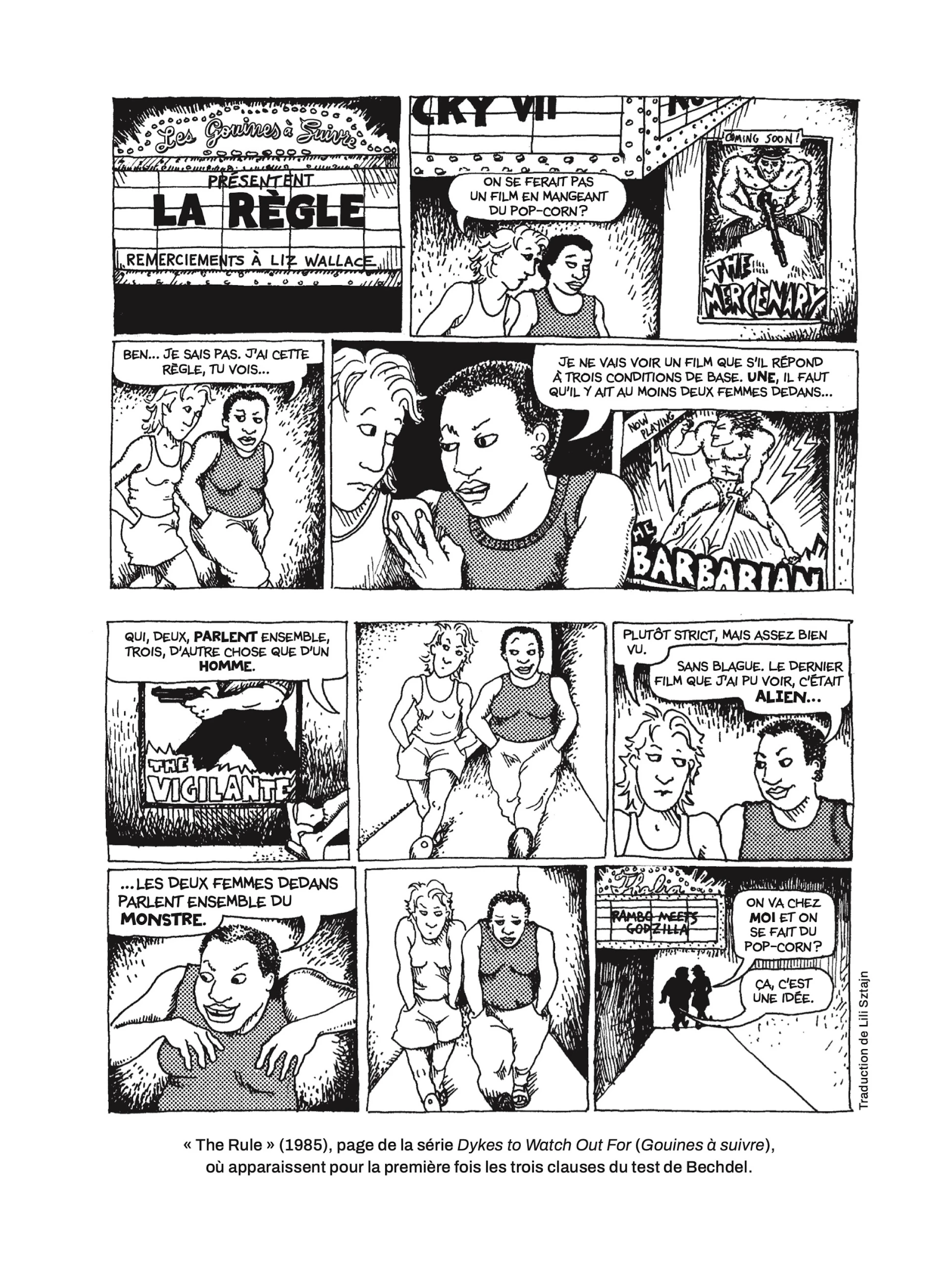
The Bechdel test involves asking yourself three questions when watching a film:
1. Are there two named women?
2. Who are having a conversation?
3. About something other than a man?
This test became popular around the turn of the millennium, entering the realm of popular culture. It was taken very seriously, as if these boxes absolutely had to be ticked to be considered a feminist movie. In reality, the test originated from a lesbian joke by a cartoonist named Alison Bechdel in her comic strip, Dykes to Watch Out For. In a panel dating from 1985, two women walk past a movie theater and decide not to go in because there wasn't a single film where two named women talked about anything other than a man.
In La véritable histoire du test de Bechdel (The True Story of the Bechdel Test), I try to understand how this 1985 comic strip became a test that was disconnected from Alison Bechdel's work, how the lesbian context and feminist humor were erased. I also try to connect it to other works, such as Virginia Woolf's A Room of One's Own, and to understand the thread running through these works, which all address the same issue: the lack of representation felt by women in artistic creation. It's worth noting that the majority of the most-watched films fail the Bechdel test, which clearly illustrates the extent of sexism present in the world of cinema, where women are apparently unable to talk about anything other than men.
Today, we meet Isabelle, co-founder of Blumenhaus magazine, who moved to Morbihan five years ago.
Today, we meet Dothy, an artist from Quiberon.
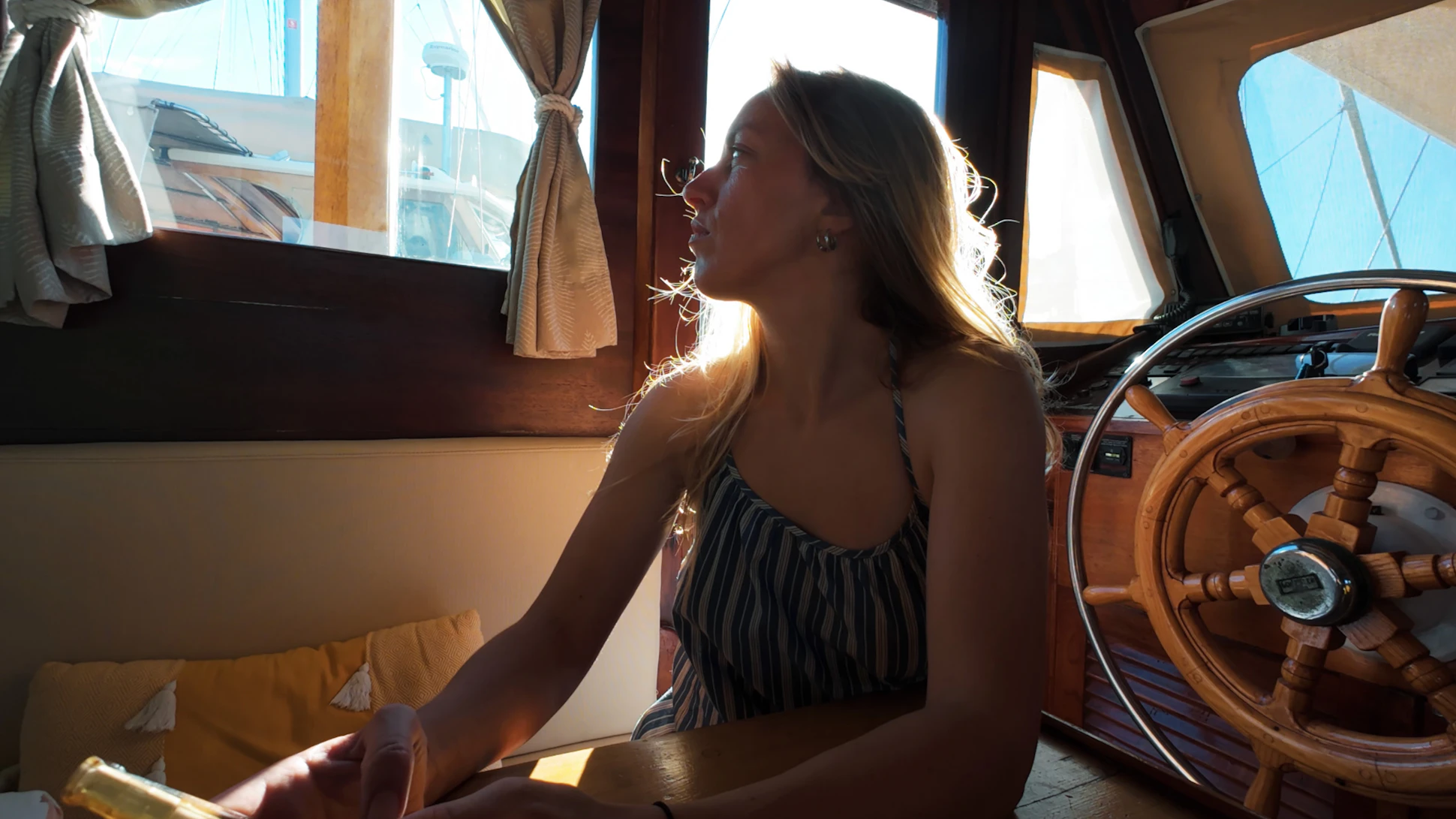
Today, we’re meeting Morgane, a sailor from the Côtes d’Armor, to talk about her connection to Brittany.
Author and director Iris Brey explores the notion of the female gaze in her research: and for you, we asked her a few questions.